
Thursday, June 28, 2012
Michael Burks final album called "Show of Strength"


Wednesday, June 27, 2012
Guitar Slinger: Bernard Allison

I took this photo of Bernard Allison at the Chesapeake Bay Blues Festival May 19, where he and guitarist Lurrie Bell had been called to perform in place of Michael Burks, who had died on May 6. Allison and Bell played a set that was dubbed “A Tribute to Michael Burks,” who only two months earlier had spoken to this publication about his upcoming new album (you can catch the videotaped interview at
http://beldonsbluespoint.blogspot.com/2012/03/i-remember-first-time-i-met-michael.html )
Also managed to have the following conversation with Allison, in which he talked about his friendship with Burks and why being involved in a tribute to the late guitarist was so important to him. Allison also talked about his own plans for a new recording, as well as playing the blues with a certain superstar musician from Minneapolis who has a penchant for purple things.
The conversation started with him recalling the moment he received the news about Burks:
BBP: You got called for this at the last minute, right? It was unexpected?
Allison: Yeah. Exactly. Initially Lurrie and I were going to be guests of Michael. In fact, I was in the airport that Sunday because we were traveling and had like a six-hour layover. So it must have happened immediately after we left, because by the time I got home, I got the call. But me and Michael, we’ve been through a lot and played a lot together…I still don’t believe it. When they called me and asked me if I could replace him, I was like “sure, I’ll do anything that I can to not get it cancelled or anything like that,” because Michael wouldn’t have wanted that, first of all. And there are talks of me possibly doing other dates for him, you know, between my own dates.
BBP: Now how would you describe your style of guitar playing in contrast to his?
Allison: I think we had kind of the same influences growing up. You know being a guitar player and liking B.B. King and Lightnin Hopkins and the old school, my dad (the late guitarist Luther Allison). We all just had to put our own input into it, to try to turn it into us, as opposed to saying “he sounds like Freddy King” or “he sounds like Luther Allison.” I tried to combine everything that I learned …..
BBP: One of the things I was curious about you was your father. What was the biggest influence he had on you as a musician?
Allison: Well, basically I taught myself. He pretty much taught me the rules of the road, more or less, than anything musical. I played like three years before he even knew that I played. But he was like a big brother to me as much as a father…just wanted me to finish school, and the little warnings to get on the road and being careful with things like that. So that’s my biggest blessing.
BBP: Do you ever have a concern that when people listen to you, that they want to hear him initially?
Allison: When I first came back to the states from Paris, everybody…I’m sure they came to see how close I was to my dad. And I have a lot of him in me but I have a lot of others, too. So I just can only carry our family name the best that I can.
BBP: You’re in Minneapolis now, right?
Allison: Yes.
BBP: Do you ever see Prince?
Allison: I do a lot with Prince and Jellybean (Johnson, drummer and guitarist for the Time) and The Time and--Minneapolis is like a breeding ground for music. So, when everybody’s not touring, we have a little place in Minneapolis we all meet up and jam all night, so…
BBP: What’s it like to jam with him?
Allison: Prince likes to play the blues. So-- a lot of people don’t know it--but he’s a big fan of blues. And if you really listen to him, you’ll hear all of the Hendrix and B.B. and Albert King.
BBP: Does he ever ask you for advice?
Allison: His manager actually told me that he studies all of my CD’s and DVD’s every time he’s on the bus. (laughs) So that’s great that all of the genres can mix because we all come from the blues, you know. And Prince is a big name, and people don’t know him for that, but deep down inside, that’s where he gets it from.
BBP: And Jellybean, do you have any projects coming up with him anytime soon?
Allison: Well I just talked to ‘Bean---Jellybean works a lot with my little brother Ronnie Baker Brooks and I know that the Time are out touring right now, so the last time I saw Jellybean, probably about a month ago. I know they’re heading back to Minneapolis; I’m sure we’ll be hanging out.
BBP: I caught a show with you and Shemekia Copeland; this was maybe about two years ago? I guess it was the last performance of the Pocono Blues Festival…
Allison:…I remember it! It started raining! (laughs). I remember that!
BBP: …It was bad….
Allison: I talked to Shemekia too. Actually, we’re going to be doing some festivals this summer, so I’m looking forward to seeing everybody. That’s the fun thing about the festivals; you get a chance to actually spend some time with everyone.
BBP: Are you coming out with a new album anytime soon?
Allison: We’re actually going in the studio next month and try to have an October release.
BBP: Do you have a tentative title for it?
Allison: Not yet. They’re so many good songs and titles, take it one day at a time. It normally comes up in mid-album. You’ll say, “I like this, I like the hook of this…”
BBP: Can you tell me about some of the songs on it?
Allison: Well I write all through the year, we’re in Europe most of the time. So now like we’ve been off for a couple of months, I’ve been able to go back to all my tapes. (The new album will be) pretty similar to all of my other recordings: a little bit of R&B influence, funk, rock, blues. You know, just mix it up, and not focus so much on the guitar, but more or less good songs and my vocals and—it will be okay. It will represent (1) me (laughs).
BBP: There was an album you did, 2005, in Europe—(1) Energized….
Allison: We actually did a double live album earlier this year…also a DVD called (1) Live at the Jazzhaus, with the current lineup, and it’s pretty intense. I wanted to capture it live before moving on to my next project, so I think we nailed it.
BBP: Are there musicians that you haven’t played with yet, that you’d like to play with at some point?
Allison: I’ve pretty much played with everybody other than Clapton (laughs). I’d really like to—my dad had a chance to play with Clapton and hopefully one day I will too.
BBP: Can you send him a telegram? (laughs)
Allison: I’ve never personally met him. At the time that they did the Crossroads festival in Chicago, they were supposed to come down to Buddy’s (Buddy Guy’s Legends on Wabash Avenue) because I was playing there, but he didn’t come down. Buddy came, we played—it will happen. If it was meant to be it will happen. If not, I’ve played with a lot of the greats.
BBP: Your dad played with him on that album with Otis Rush.
Allison: Right. (1) Live at Montreux (1986). Yep, that’s great, man.
Sunday, April 22, 2012
Bluesman Lil' Ed Talks about new album "Jump Start"

Lil' Ed of Lil' Ed and the Blues Imperials was a little reluctant to talk about his upcoming album Jump Start, but we did get a little out of him about it after he performed for the D.C. Blues Society on April 15 at a Wheaton, Maryland American Legion Hall. D.C. Blues Society President Felix McClairen and Sam'i Nuriddin of the D.C. Blues Society Band were in on the conversation as Ed talked about the upcoming album, his 26 years with the Blues Imperials as well as parallels that people draw between him and Hound Dog Taylor. He also talked about what he learned from his late uncle, the legendary slide guitarist J.B. Hutto....
As always, please send any suggestions you have for us to beldonsbluespoint@yahoo.com. And please...join our site!
Sunday, March 25, 2012
Yes, We're Experienced.....The Experience Hendrix Tour

Yeah that’s me with Billy Cox, who played bass in Band of Gypsys, the short-lived but pivotal group led by guitarist Jimi Hendrix.
Cox was in the D.C. area earlier this month as part of the 2012 season of Experience Hendrix Tour, the ongoing star-powered series of concerts held to honor the guitarist, who nearly 42 years after his death is still considered to be rock’s most influential.
Held March 6 at the Music Center at Strathmore in North Bethesda, the D.C. area show kicked off the 2012 season of Experience Hendrix. The 21-concert tour will end March 31 in Denver after performances in Atlanta; Knoxville, Tennessee; Nashville, Tennessee; Charleston, S.C.; Orlando, Florida; Hollywood, Florida; Tulsa, Oklahoma; Houston, Texas; Austin, Texas and several other cities.
As befits a concert carrying the name of the most famous guitarist of yesteryear, Experience Hendrix features many of today’s leading axmen, among them Buddy Guy, Kenny Wayne Shepherd, Mato Nanji of Indigenous, Eric Gales, Dweezil Zappa (pictured below), Jonny Lang and Aerosmith’s Brad Whitford. Also playing the Strathmore was Chris Layton, one-time drummer for Stevie Ray Vaughan & Double Trouble.
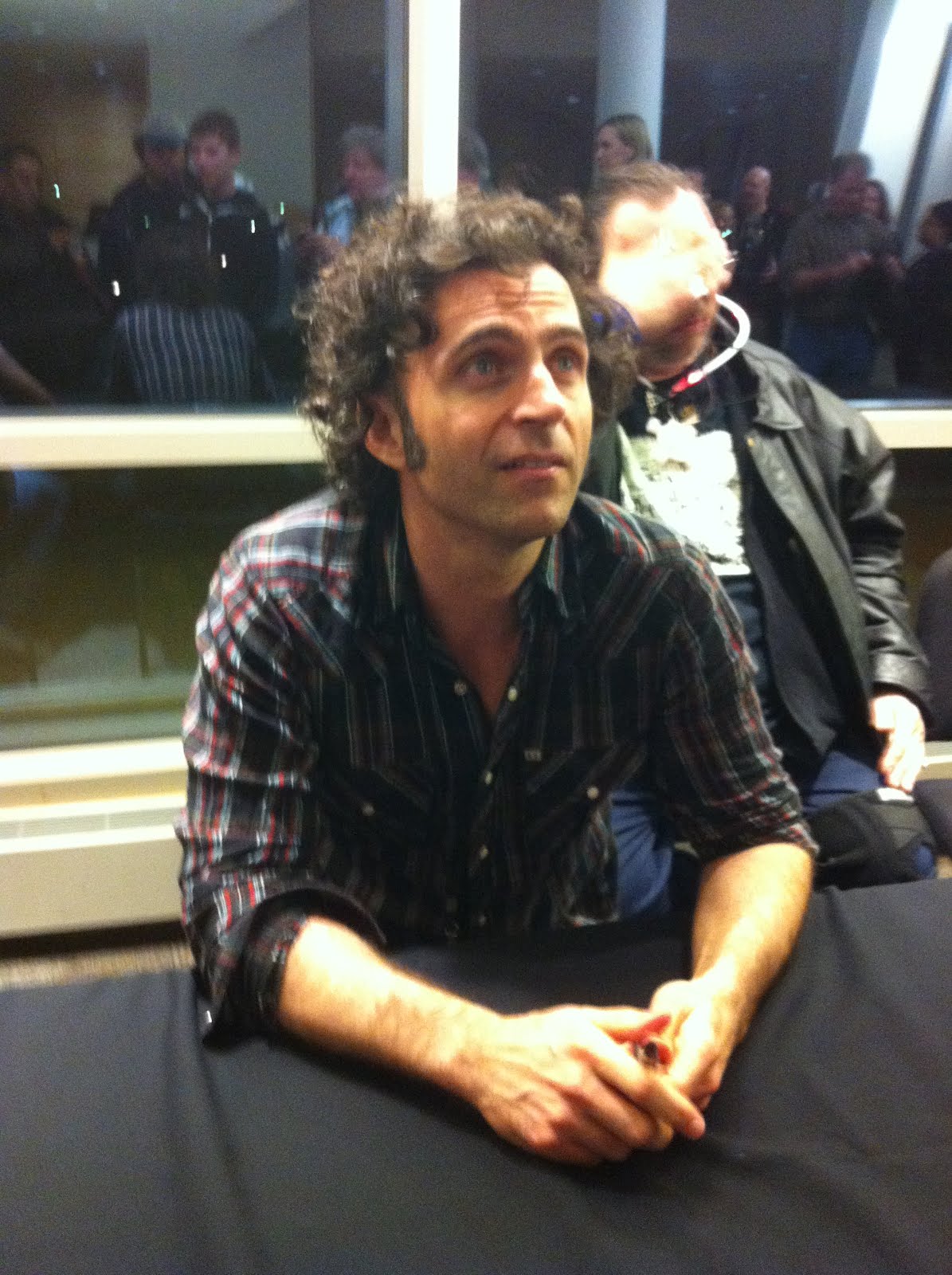
Other musicians playing the 2012 tour include bassist Bootsy Collins of the P-Funk All-Stars, Robby Krieger of the Doors, guitarists David Hidalgo and Cesar Rosas of Los Lobos, pedal steel guitarist Robert Randolph (if you want to see an interview with him, check out the following post:http://beldonsbluespoint.blogspot.com/2010/11/sacred-steel-robert-randolph-and-family.html), lap steel guitarists the Slide Brothers, blues singer/guitarist Keb Mo’, guitarist Eric Johnson of G3 and guitarist Doyle Bramhall II of Arc Angels.
The company behind the event was originally formed by Hendrix’s father James “Al” Hendrix, with the very first tribute concert held in September, 1995 at the annual Bumbershoot Arts & Music Festival in Seattle, the guitarist’s home town.
Over the next few years tribute events were held under various names: the Jimi Hendrix Electric Guitar Festival, the Jimi Hendrix Electric Guitar Competition, the Jimi Hendrix Red House Tour. In 2002 a “60th Birthday Celebration” concert was held in Seattle featuring Billy Cox; Band of Gypsys drummer Buddy Miles; Buddy Guy; Eric Gales; Guitarist Kenny Olson of Kid Rock’s band; longtime Earth, Wind & Fire guitarist Sheldon Reynolds; keyboardist Larry Dunn of Earth, Wind & Fire and bassist Bobby Watson of Rufus and Chaka Khan.
In 2004, three west coast tribute events were held under the name “Experience Hendrix.” They featured performances by Buddy Guy; Carlos Santana; guitarist Joe Satriani; guitarist Jerry Cantrell of Alice in Chains; Paul Rodgers of Bad Company; guitarist Hubert Sumlin, formerly of Howlin’ Wolf’s band; Kenny Wayne Shepherd; guitarist Neal Schon of Santana and Journey; drummer Mitch Mitchell of the Jimi Hendrix Experience and Billy Cox.
With the passing of both Mitchell and Miles in 2008, Cox is now the only living member of either the Jimi Hendrix Experience or Band of Gypsys. As a performer, he is therefore arguably the tour’s closest living link to Hendrix. He recently did an interview with this blog.
Here’s part one:
http://beldonsbluespoint.blogspot.com/2011/12/last-gypsy-standing.html
and here’s part two:
http://beldonsbluespoint.blogspot.com/2011/12/bbp-now-band-of-gypsys-lasted-only.html
Other than the music and the picture with Cox, having the following conversation with Dweezil Zappa was the highlight of my evening at Experience Hendrix. While talking to him, I kept thinking that, with the exception of Hendrix, Earth, Wind & Fire and James Brown, I had as a young man listened to his father Frank Zappa more than any other musician or group:
And yeah, you don’t have to tell me how dumb it was to ask Dweezil—who was one year old when Hendrix died—what he remembers about the guitarist. Let’s just say I was caught up in the excitement of the moment.
Anyway, here is some music from the show.
First, Jonny Lang and Brad Whitford do "Fire:"
Then, Kenny Wayne Shepherd with "I Don't Live Today:"
Kenny Wayne Shepherd again helms guitar on Voodoo Chile: "
And Buddy Guy and Jonny Lang:
Remember, anything you'd like to share with us, email us at beldonsbluespoint@yahoo.com. Also, join our site! Represent!
Take care...
Tuesday, March 20, 2012
Kim Wilson to Rush Limbaugh: Hands Off My Songs!
 R
Found out about this by reading harmonica player Bob Corritore's newsletter. Here's the situation as best I can tell it::
Kim Wilson, harmonica player and lead singer of the Fabulous Thunderbirds, doesn't want his songs on radio host Rush Limbaugh's syndicated show.

Limbaugh has been under fire since last month when he called Georgetown law student Sandra Fluke a “slut” after she argued to Democratic House members that religious institutions should offer free contraceptives in their insurance plans. The case drew even more public attention after Republicans refused to allow her to make her arguments before the House Oversight and Government Reform Committee.
Limbaugh, who also recommended that Fluke post videotapes of herself having sex on line, argued that the law student was essentially asking to be paid for having sex.
“The Constitution gives us the right of free speech. (But) I don’t want people to think that I’m affiliated in any way, shape or form with him,” said Wilson, adding that he was “mortified” by Limbaugh’s comments. “The message he promotes is something I’m totally against.”
Limbaugh has not yet responded to an email from Beldon’s Blues Point asking if he will comply with Wilson’s wishes.
Wilson made his demands known in a March 6 memo sent to Limbaugh and his show’s distributors, the media conglomerate company Clear Channel Communications and its radio syndication arm, Premiere Radio Networks. The Thunderbirds’ 1986 hit “Tuff Enuff” is among the music Limbaugh has used on his show.
So far, the controversy is believed to have cost Limbaugh 142 sponsors. On March 12, Premiere announced that it was suspending national advertising on the program for two weeks.
In announcing his demand, Wilson said: “What kind of example is Rush setting for the youth of America? He’s a proven drug addict and is now in his fourth marriage…both things his listeners rail against and yet these people still listen to him. Rush Limbaugh is a promoter of ignorance. He’s a clown..all he does is stir up the rabble that exists in this country. I don’t think he’s an idiot—he makes 50 million dollars a year. The things he says are not only disrespectful, chauvinistic and racist—it’s about everything that—in my mind—is wrong.”
In 2009 Limbaugh turned himself into authorities in Palm Beach County, Florida in response to a warrant charging him with fraud to conceal information to obtain prescriptions. Prosecutors, who had accused Limbaugh of “doctor-shopping” in order to illegally acquire OxyContin, agreed to drop the charge if he continued treatment.
Wilson also said Limbaugh’s description of Fluke as a “slut” was “factual misinformation.” “It wasn’t funding as part of a health bill that she wanted, but for her own insurance—that’s private industry,” he said.
Kim also said he is releasing an album through Severn Records later this year. Here is an interview we did with him in January, 2010:
http://beldonsbluespoint.blogspot.com/2010/01/harmonica-player-kim-wilson-has-come.html
Bob also gave us notice of the following deaths in the blues world. Links to newspaper obituaries about these great artists appear under their names:
*Piano player Big Walter Price
http://blogs.houstonpress.com/rocks/2012/03/houston_blues_legend_big_walte.php?utm_source=Newsletters&utm_medium=email
*Harmonica/bass player Andy Cornett
http://www.theind.com/news/9962-andy-cornett-local-musician-dies
*Guitarist Eddie King
http://lamazablues.blogspot.com/
*Guitarist Bugs Henderson
http://www.star-telegram.com/2012/03/10/3800606/bugs-henderson-local-blues-guitar.html
*Saxophonist Red Holloway
http://www.guardian.co.uk/music/2012/feb/29/red-holloway
Well, anything you'd like to share with us, let us know at beldonsbluespoint@yahoo.com. In the meantime, join our site! Represent!
Friday, March 16, 2012
A City of Music and History....

There’s the Memphis Rock ‘n’ Soul Museum. There’s Sun Studio, where B.B. King, Jerry Lee Lewis, and Elvis Presley recorded. And, of course, there’s Graceland. There’s also the Gibson Guitar Factory.
I had time to visit two museums in Memphis. One was the Stax Museum of American Soul Music, located at the site of the old Stax recording studios on McLemore Avenue.
The other was the Lorraine Motel, where in 1968 Dr. Martin Luther King was murdered and which has since become the site of the National Civil Rights Museum.

Located at 450 Mulberry Street, the museum includes the hotel and a large addition built around it. It also includes a rooming house across the street. James Earl Ray initially said it was from inside the rooming house that he shot King, who was killed by a single bullet while standing on the balcony outside Room 306.
Ray, who received a 99-year sentence and who died in 1998, later tried unsuccessfully to withdraw his plea of guilty to the crime.


The motel has an interesting history. Named the Windsor in the 1920’s, it was purchased in 1945 by Walter Bailey, who renamed it the Lorraine after his wife “Loree” and the song “Sweet Lorraine.”
During segregation, the Lorraine was one of the few hotels in Memphis that would accept black travelers. Song writers and musicians for the Stax Record Company, along with other visiting performers, frequently stayed there, including Ray Charles, Aretha Franklin, Ethel Waters, Otis Redding, The Staple Singers and Wilson Pickett.
King, who had stayed at the Lorraine on previous trips to Memphis, was in town to support striking sanitation workers when he was assassinated. Working with a local radio station, Bailey started the ”Save the Lorraine” campaign after the civil rights leader’s death with the aim of keeping the motel a civil rights shrine. To further that cause, a group of prominent Memphis residents created a foundation they called the Martin Luther King Memorial Foundation.
In 1984, they changed the foundation’s name to the “Lorraine Civil Rights Museum Foundation,” through which they later purchased the property for $144,000.
Constructed under a design created by former Smithsonian Institution curator Benjamin Lawless, the museum opened in 1991.
There was one point of controversy. A former housekeeper, Jacqueline Smith, had been staying at the hotel since 1973. When she was told to leave, she barricaded herself inside of her room and had to be forcibly evicted.
A marker in front of the museum recognizes King for his role in the civil rights movement.

Nominated for an Academy Award in 2008, the documentary tells its story largely through the eyes of Reverend Samuel “Billy” Kyles, who was on the balcony when King was killed. Former NAACP Executive Director Dr. Benjamin Hooks; Maxine Smith, a one-time Executive Secretary for the NAACP’s Memphis Branch; and Taylor Rodgers, a sanitation worker who was involved in the strike and had marched with King and Kyles, also appear.
As visitors walk through the museum, they take a chronological journey through the United States’ civil rights history, starting with the first arrival of slaves here in 1619.

Visitors can see the interior of Room 306—as well as the balcony itself—through transparent plastic.
The rooming house exhibits cover the aftermath of King’s assassination, the legacy of the civil rights movement and the role the movement played in the advancement of human rights globally. Evidence connected with the assassination—including the Remington rifle believed to have fired the fatal shot—is included in the exhibits.
Beldon’s Blues Point went to the Stax Museum a few days after Soul Train host Don Cornelius died. The museum payed homage to Cornelius on its marquee.

The museum traces soul music from its roots in gospel and blues. It doesn’t just cover Stax artists; it even pays respectful attention to the company that became Stax’s primary competitor back in the day: Motown Records. Possibly because of Cornelius’ death, there was a “Soul Train” exhibit displaying clips from the show on a large screen.
Still, you get a healthy dose of Stax history, a lot of which I didn’t know when I was nodding my head and snapping my fingers to their music when I was a silly teen–ager during its heyday.
For one, the organization that eventually became Stax Records was founded in 1957 by Jim Stewart, a white country fiddler who knew little about black music.
Stewart got his start in the music business by recording country music out of a North Memphis garage owned by his wife’s uncle. The following year, Stewart’s sister, Estelle Axton, mortgaged her home to buy recording equipment for the company, which at the time was called Satellite Records.
In the summer of 1960, Satellite released “Cause I Love You,” by Rufus Thomas and his daughter, Carla.

In 1961, Satellite released “Last Night,” an instrumental by a Memphis high school group known as the Mar-Keys. That same year, Stewart changed Satellite’s name to “Stax,” a combination of the first two letters of his surname (ST) with the first two letters of his sister’s (AX).
Over the years Stax Records collected a stable of artists that included the Thomases; Booker T and the M.G.’s; bluesman Albert King; singer/songwriter Isaac Hayes; the Bar-Kays; bluesman Little Milton; the Soul Children; singers Sam and Dave of “Soul Man” fame; Johnnie Taylor; and perhaps their brightest star of all, Otis Redding, who, along with several of the Bar-Kays, tragically perished in a 1967 plane crash.

In 1965, Al Bell, a former disc jockey from Little Rock, Arkansas became director of promotions at Stax. Over the years, Bell, an African-American, rose through ranks, becoming executive vice-president in 1968.
In addition to his administrative work, Bell worked with Stax artists as a songwriter and promoter. After Redding’s death, when Stax separated from Atlantic Records, Bell brought on several signees—including the Emotions, the Staple Singers and the Soul Children—in his effort to rebuild the company’s catalog. In 1969, he bought out Estelle Axton to become a 50-50 co-owner with Stewart.
The Stax sound was grittier and closer to the blues than the more polished, pop-oriented Motown. It emphasized the low end, with the extensive use of horns in the background. For bridges, it relied on pre-arranged horn ensembles instead of the guitar, saxophone or keyboard solos heard on much of the popular songs of the day.
Over the years, the company carved a place for itself in popular music.
In 1967, several Stax artists toured Europe to enthusiastic fan support. Also that year—a few months before his death—Otis Redding shared the bill with popular rock performers such as the Who, Jimi Hendrix and Janis Joplin at the Monterey Pop Festival in California.


In 1972, the company filmed Wattstax, a documentary centered around a Stax charity concert in Los Angeles.

But by the mid-70’s the company was in trouble. A distribution deal with CBS didn’t meet expectations after CBS started warehousing the records. On another front, the IRS began investigating Stax after an employee was found carrying $100,000 through an airport.
By 1974 the company was unable to pay salaries for over 200 employees. It also found itself immersed in a web of lawsuits and countersuits.
The year 1975 brought more bad fortune, and from several directions. A record-pressing company sued Stax and a bank foreclosed on the company publishing arm. Bell was indicted by a federal grand jury for bank fraud, a charge he was later acquitted of. And Al Jackson Jr., a drummer, songwriter, producer and founding member of Booker T. and the M.G.’s, was murdered.
The company went into involuntary bankruptcy in December, 1975.
In 1981, a bank deeded the McLemore Avenue facility to the Southside Church of God in Christ for $10. The church demolished the building in 1989 to make way for a community center that was never built.
The current building is a replica of the original. Among the numerous displays, you will find this jacket owned by Otis Redding:


Here is some of the original recording equipment used by Stax:

And here is the piano used to compose one of the company’s most popular hits, “Green Onions” by Booker T. and the M.G.’s:


Wednesday, March 7, 2012
The Iron Man Cometh: Guitarist Michael Burks

Sometime between sets, we started a conversation and he bought me a beer! I remember being amazed that someone with such prodigious skill on guitar—who was that good at anything—could be so humble.
Since then, I have followed his career over three albums (I’ve never heard his first album, the self-produced From the Inside Out, released in the late 1990’s) and concerts in Whitehall, Pennsylvania; Chicago; and Philadelphia. I even drove to suburban Baltimore from here in D.C. one night to hear him play. That show sold out before I got there.
On Sunday, he was here in the Nation’s Capital playing the Hamilton, a restaurant/bar/music hall opened downtown a few months ago by the owners of Clyde’s, a popular Washington restaurant chain. On the verge of releasing a new CD, Burks will also play Chicago (at Buddy Guy’s Legends), St. Louis, Boca Raton, Tampa, Jacksonville Beach, and Iceland. Yeah, Iceland.
For us D.C. people, he will be back –at least within hollerin’ distance—on May 19, when plays the Chesapeake Blues Festival in Annapolis.
Burks is an artist of striking contrasts. When he’s just talking he’s easy going and relaxed—just the type of cat you’d expect to buy someone a beer on a humble.

They were all excited to see him.
But Burks, who has the nickname “Iron Man,” becomes another person when he picks up his guitar. Serious. Studied. Intense. It is like watching Thor pick up his hammer. Check out the videos I recorded and you’ll see what I mean.
He has the type of musical heritage that a lot of other musicians only dream about. His grandfather, Joe Burks, was an old-style Delta blues guitarist in Camden and his father, Frederick, was a bass player. Frederick Burks eventually moved to Milwaukee, Wisconsin, where he worked the steel mills by day and played the clubs at night, sometimes backing Sonny Boy Williamson II.
Born in Milwaukee, Michael started learning guitar at the age of two. His father used a curious ruse to get him to learn songs: he began paying young Michael a dollar for every song he learned. But Frederick Burks discontinued that practice. To find out why, check out my interview with Michael below.
After a machine accident injured his hand in the early 1970’s, Frederick moved back to Camden and opened the Bradley Ferry Country Club, a 300-seat juke joint. The club provided ample performance experience for young Michael. In addition to fronting the house band, he played with rhythm and blues and blues legends who passed through the club.
When Bradley Ferry closed in the mid-80’s, Burks took a job as a mechanical technician for Lockheed-Martin. But the blues were still calling to him and in 1994 he formed his own band.
After From the Inside Out, Burks joined Alligator Records, for which he recorded 2001’s Make it Rain. It was hearing that album played inside of a Whitehall, Pennsylvania Border’s that first introduced me to Burks. He followed up that album with 2003’s I Smell Smoke and 2008’s Iron Man.
In our interview, Burks talked about the new album, among other things:
Since we were in D.C., I also asked his opinion on the recent blues performance at the White House featuring Buddy Guy, Mick Jagger, Shemekia Copeland and others:
Some of his friends and relatives from Camden talked about him:
His band played a set that included this cover of B.B. King’s “The Thrill is Gone:”
There was also this cover of Albert King’s “I’ll Play the Blues For You:”
There was also this searing slow blues. Stay with it, because he talked a little while with the audience before getting underway with it:
There was also this song that he described as “Mississippi Hill Country Music:”
There was also this song:
Here is Burks website if you want to know more about him:
http://www.michaelburks.com/tour.html
If you have Beldon’s Blues Point questions or comments, contact us at beldonsbluespoint@yahoo.com Also, join our site! We’d really appreciate it!
Subscribe to:
Posts (Atom)